


Hospital Siege: How EFCC Operation Caused Deaths, Missing Patients at UUTH – Part I
By Ndifreke Jacob and Ibanga Isine
Harvests of beatings and humiliation
Investigation by GuardPost shows that no fewer than 15 patients may have lost their lives following the invasion of the University of Uyo Teaching Hospital (UUTH), Akwa Ibom State, by operatives of the Economic and Financial Crimes Commission (EFCC) on May 12.
However, the fate of several other patients who reportedly fled the facility against medical advice remains uncertain.
According to two top hospital officials who spoke with this publication on condition of anonymity, more than 15 deaths occurred during the crisis.
They noted that the total number may be higher, adding that the withdrawal of services by doctors and nurses made it impossible to record fatalities, and that relatives allegedly removed some remains hurriedly to avoid payment of hospital bills.
As heavy gunshots and teargas exploded that morning, GuardPost learnt that frightened relatives held on to patients fighting for their lives at the Accident and Emergency Unit of the hospital and at the Intensive Care Unit, critically ill patients were thrown into absolute confusion.
As the confrontation by the rampaging operatives escalated, the hospital’s generators were switched off, and union leaders ordered their members to withdraw services in protest.
The consequences were immediate and potentially devastating. Patients on life support machines, the critically injured in the Accident and Emergency Unit, and frail newborns in incubators were left in danger.
Immediately, doctors disappeared from consulting rooms. Nurses abandoned their duty posts. Laboratories were shut down. Theatres were abandoned. Classrooms and payment points were deserted.
Many patients who could walk took to their heels. Those who were unable to run were left behind in the chaos that followed.
Outside the administrative block, angry staff locked the gates against the heavily armed masked men who had desecrated the peaceful atmosphere of what was supposed to be a sanctuary of healing.
Many staff members were assaulted, injured, humiliated, and arrested in what the Executive Director of Policy Alert, Tijah Bolton, described as an “ill-conceived operation that should never have happened.”
You can also read:
Eyo Ekpe, a well-known Professor of Cardiothoracic Surgery and Deputy Chairman of the hospital’s Medical Advisory Committee, was among those affected.
The fact that a renowned surgeon and senior hospital administrator was dragged from his seat and viciously beaten, while staff members who tried to record the incident were assaulted and had their phones smashed, showed the level of impunity demonstrated during the operation.
It also raises serious concerns about the apparent disrespect for the sanctity of human life, the safety of healthcare workers, and the inviolability of a medical facility devoted to saving lives.
By the time the trigger-happy operatives withdrew after arresting six staff they may not prosecute, the hospital had become a crime scene and a tragedy whose full impact may never be completely known.
Despite an extensive investigation, this publication was unable to determine who ordered the invasion and the reasons behind it.
Many weeks after the troubling incident, it appears that the country has moved on as if nothing unusual happened. The public outcry has subsided, and the situation appears to have disappeared from the media.
The EFCC’s response was a weak apology, which many people saw as lacking genuine remorse for the injuries, humiliation, arrests, and inconveniences caused by the deadly operation.
When the Dead and the Living Ran Away
While viral videos circulating on social media captured terrified staff, patients, and visitors scrambling for safety during the EFCC raid on the hospital, they revealed only a fraction of what witnesses describe as one of the darkest days in the history of the institution.
GuardPost’s investigation shows that at least 15 patients died as a result of the operation. At the same time, dozens more reportedly absconded from the hospital or were taken away by family against medical advice.
Because regular medical services collapsed during the incident and during the two-day strike, the exact number of casualties may never be known.
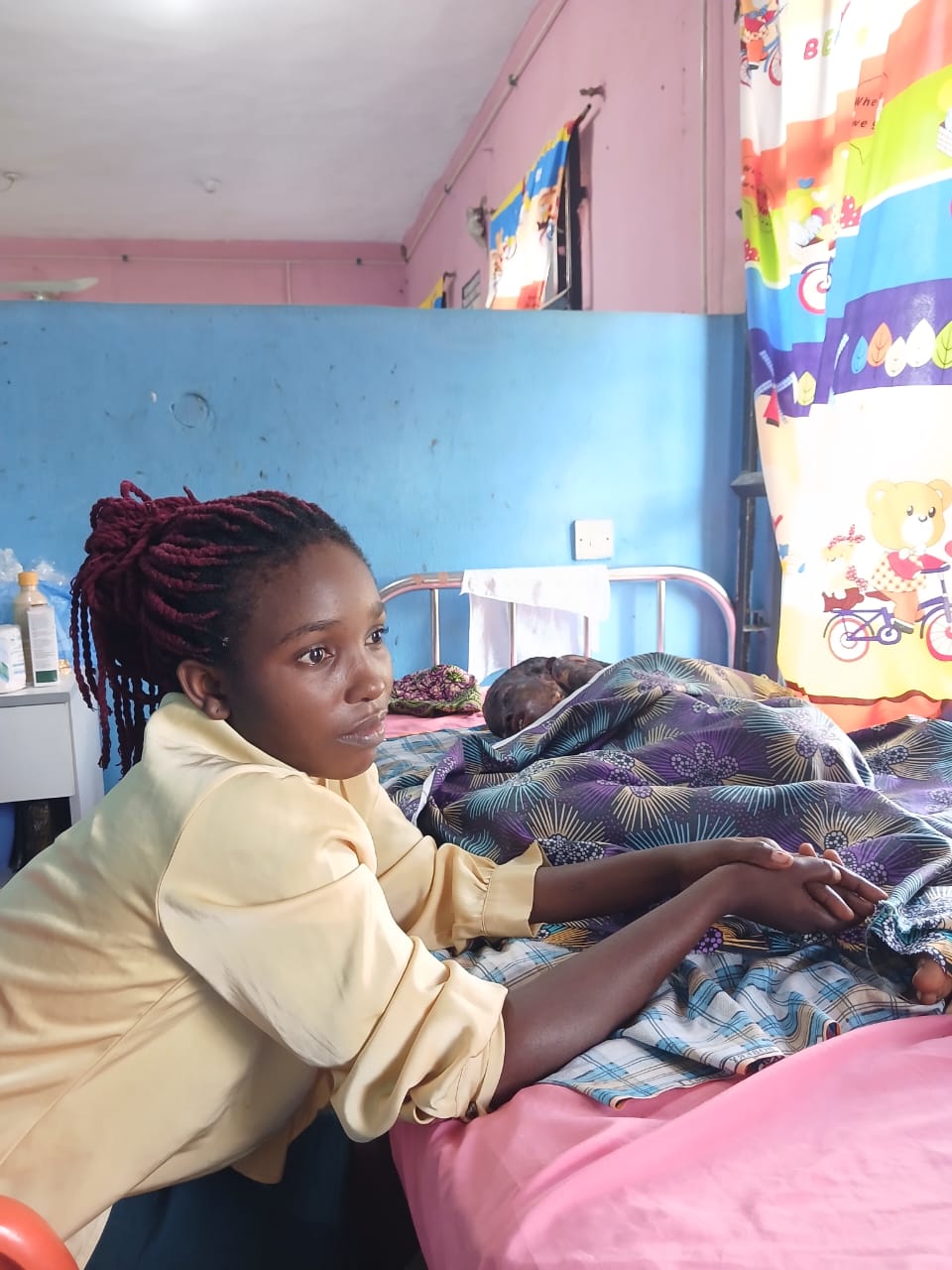
What happened within the wards after the power source was turned off and essential services were shut down may never be completely known. The whole extent of the pain is likely to emerge only in fragments gathered from the accounts of grieving families, traumatised patients, and worried healthcare workers.
Doctors and nurses who saw the commotion are still attempting to understand what happened. Families are still dealing with the loss and uncertainty that followed. For many, the memories are still raw and painful.
What was once a sanctuary of healing, hope, and life preservation was turned into a scene of terror, confusion, and human suffering. The EFCC created a theatre of war in the heart of a hospital.
Inyene Samuel
Mrs. Inyene Samuel, whose son was receiving treatment at UUTH during the crisis
Inyene Samuel, whose child survived the crisis, said she watched helplessly as many relatives rushed their loved ones out of the hospital.
“So many people died, both the young and the old, and their relatives took them away,” she told GuardPost, with her voice still heavy with emotion.
Another relative, Lizy David Lawson, whose daughter, Precious, is receiving treatment at the Paediatric Surgical Ward, said what happened that day is difficult to understand.
“What they did was completely unnecessary,” she said angrily. “How do you invade a hospital, arrest a doctor, and start firing guns and teargas? How did they expect sick people, especially those in critical condition, to survive such chaos? Many patients died, and others left the hospital that very day.”
For many UUTH staff, it would be difficult to forget what happened on May 12.
One consultant, who spoke under qualified privilege, said the exact scale of the tragedy may never be known because the very people responsible for documenting emergencies were themselves caught in the crisis.
According to him, as the crisis escalated, the number of deaths increased, adding that some patients died from complications caused by the interruption of medical services.
“I heard cries from the wards during the attack,” he recounted. “At that time, I did not fully understand what was going on.”
You can also read:
When he went back hours later to get personal items from his office, the dire situation in the hospital had become clearer.
“I saw patients in distress. I know some of them eventually died, but there was nothing anyone could do at that moment. In a hospital setting, especially in emergency and critical care units, even a brief interruption can have devastating consequences.”
He said the disruption created conditions in which helpless patients were left without the appropriate medical attention they required.
“It is possible that patients under treatment died as a result of complications, the absence of doctors to handle emergencies, and the chaotic situation that left many of them exposed,” he said.
Perhaps the most distressing part of the issue is that there may never be an accurate account of what happened within the teaching hospital.
When asked about the number of patients who died, the consultant and other witnesses interviewed by GuardPost provided similar answers. “There was nobody to document what happened.”
“There was nobody to certify some of the deaths before relatives took their loved ones away. That is what happened,” he added.
You can also read:
Another senior medical staff member who also declined to be named due to reasons of confidentiality said the hospital often reports at least two to three patient fatalities every day.
“We’re talking about a situation in which doctors and nurses were absent from the Intensive Care Unit, Accident and Emergency Unit, and general wards for longer than 48 hours. Those are the areas where the majority of deaths are typically recorded,” the insider said.
Ekanem Eshiet, a specialist in Emergency Medicine and Trauma Care at UUTH, confirmed that some patients in the Intensive Care Unit and the Accident and Emergency Department died during the crisis. However, he did not provide the exact number of casualties.
“Some patients who were in the Intensive Care Unit and the Accident and Emergency wards died, and that is what has not been reported. The impact was both direct and indirect.
“After seeing how a professor of surgery was assaulted, medical professionals decided to withdraw their services. As a result, many patients who depended on continuous medical care were left without guidance on the next steps in their treatment, and some lost their lives.
“Many of the patients had traumatic brain injuries and required constant monitoring and intervention. That was part of the indirect impact.
“The direct impact came when teargas was released within the hospital environment. Some patients with respiratory conditions, including asthma, suffered severe reactions. There were also cases of panic and anxiety attacks,” he said.
Attempts to speak with the hospital’s Chief Medical Director, Prof. Emem Bassey, were unsuccessful. He did not return calls or react to SMS or WhatsApp messages sent to his verified phone number.
Similarly, Dr. Ekem Emmanuel, the Akwa Ibom State Commissioner for Health, and the EFCC spokesperson, Dele Oyewole, did not respond to calls requesting their comments on the incident.
GuardPost learned that hours after the invasion, grieving families started leaving with the remains of their loved ones, frightened patients abandoned treatment, and the hospital built to save lives became an epicentre of confusion and death.
Several weeks later, the questions remain unanswered. What was the number of patients who died? How many people abandoned treatment and never returned? And how much did a law enforcement operation inside one of Nigeria’s busiest tertiary health centres cost the most vulnerable patients? How much did it cost the government in revenue losses?
The answers could potentially be buried in the silence that followed the gunshots, suffocating tear gas, merciless beatings, and arrests of the hospital personnel.
However, this investigation has just begun, and we are determined to dig deeper.
This series is funded by GuardPost Farms as part of its community social responsibility programme in Akwa Ibom State.