Suspected herdsmen Attack Tiv communities in the wake of Nasarawa Bombing

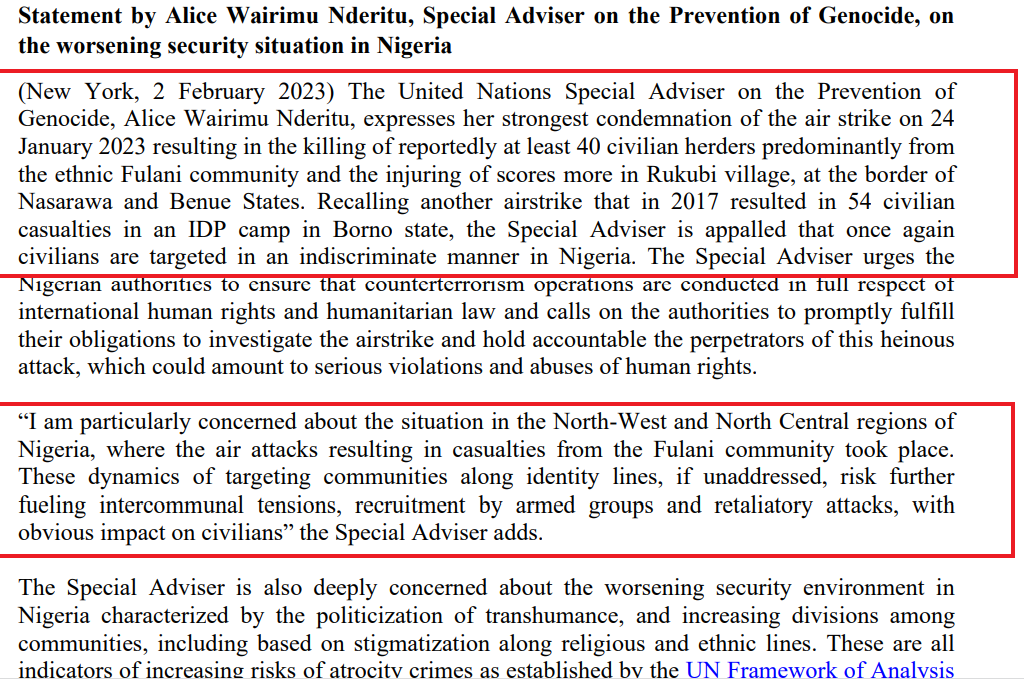
Following a recent bombardment of individuals thought to be herders on the border of Benue and Nasarawa States, it has been claimed that suspected Fulani herdsmen have exacted revenge on Tiv communities in Nasarawa State.

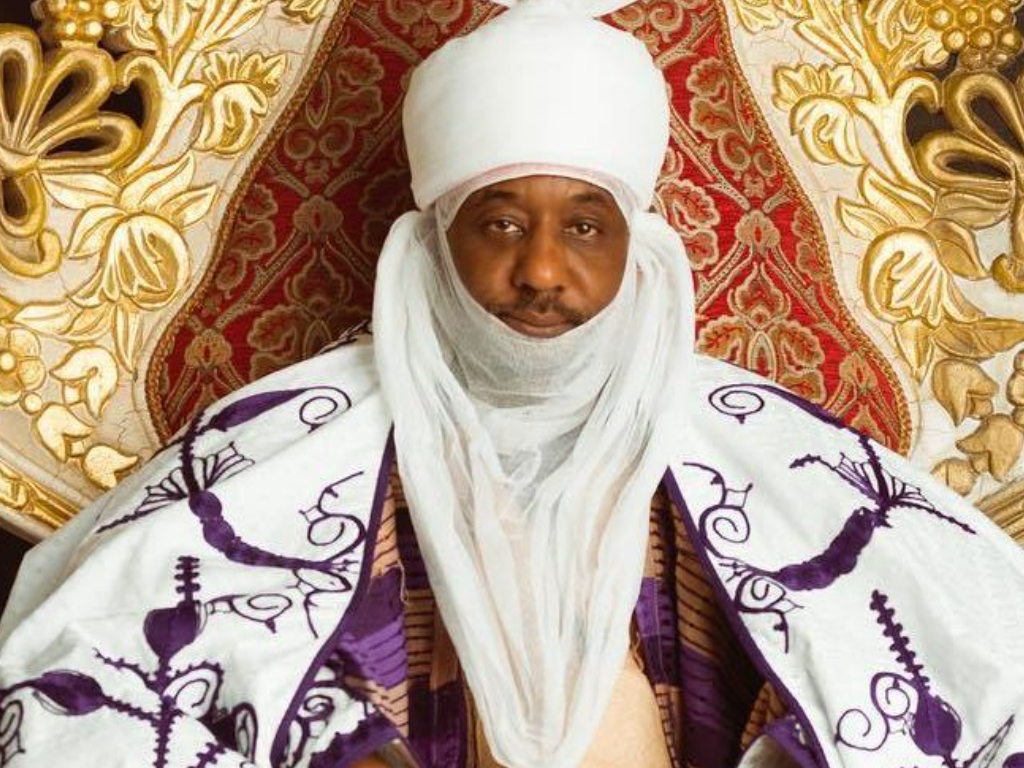
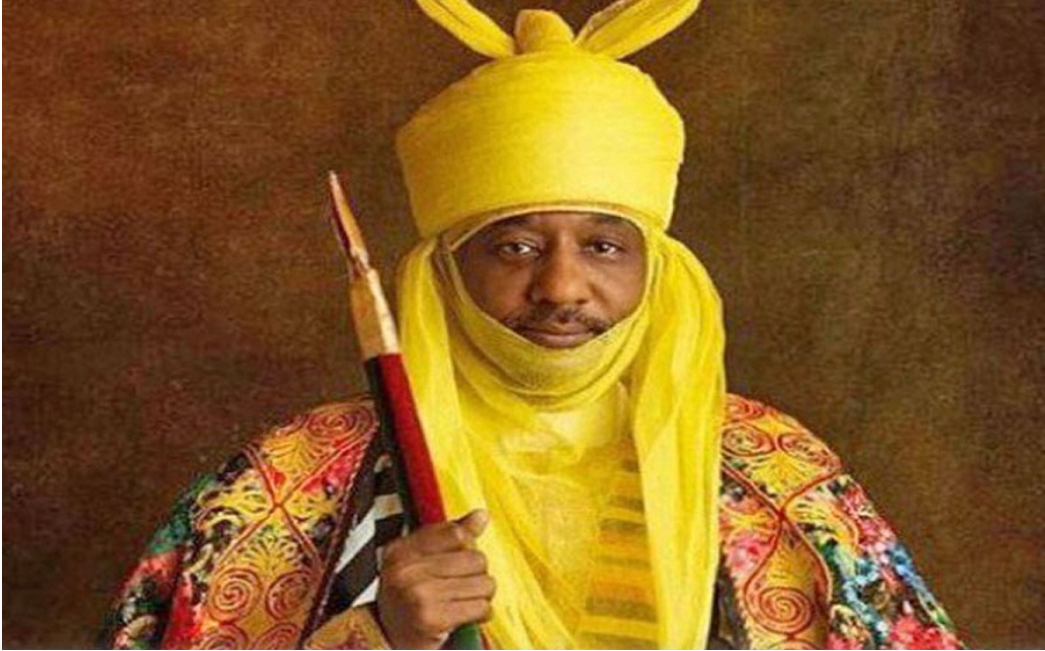
This follows comments by the deposed Emir Sanusi concerning the killings in which he had earlier alleged that the Governor of Benue State, Samuel Ortom was responsible for the alleged airstrike in Rukubi, a village on the border between Nasarawa and Benue States which left 56 persons dead with others injured.

Emir Sanusi said “All the air strikes that took place in Nasarawa were masterminded from Makurdi. We must hold him responsible since we know his position against Fulani. It’s only an investigation that will avail him of the allegations. Why won’t t there be an investigation to reveal who masterminded the bombardment? And who gives orders to the Air force to always launch these airstrikes?


However, the Tiv community of Nasarawa State claimed yesterday that suspected armed herdsmen were continuing to attack and murder innocent Tiv people in the southern portion of the state as retaliation for the recent bombing.

Mr Peter Ahemba, president of the Tiv Development Association (TIDA) in Nasarawa State, raised the alarm yesterday in a press conference in Lafia. As a result, he urged the federal and state governments to take immediate action to put an end to the ongoing attacks and killings.


He further said that heavily armed herdsmen had singled out and attacked the Tiv people, highlighting the fact that numerous innocent Tiv farmers had already been killed and driven from their homes in the state’s Doma, Keana, and Obi Local Government Areas.

Ahemba emphasized that the intelligence report available to the TIDA leadership showed that the heavily armed herders were preparing to launch more lethal attacks on Tiv settlements throughout the state’s southern zone, as well as portions of the Kokona and Nasarawa Local Government Areas, in order to ensure the complete annihilation of the Tiv nation in the state.

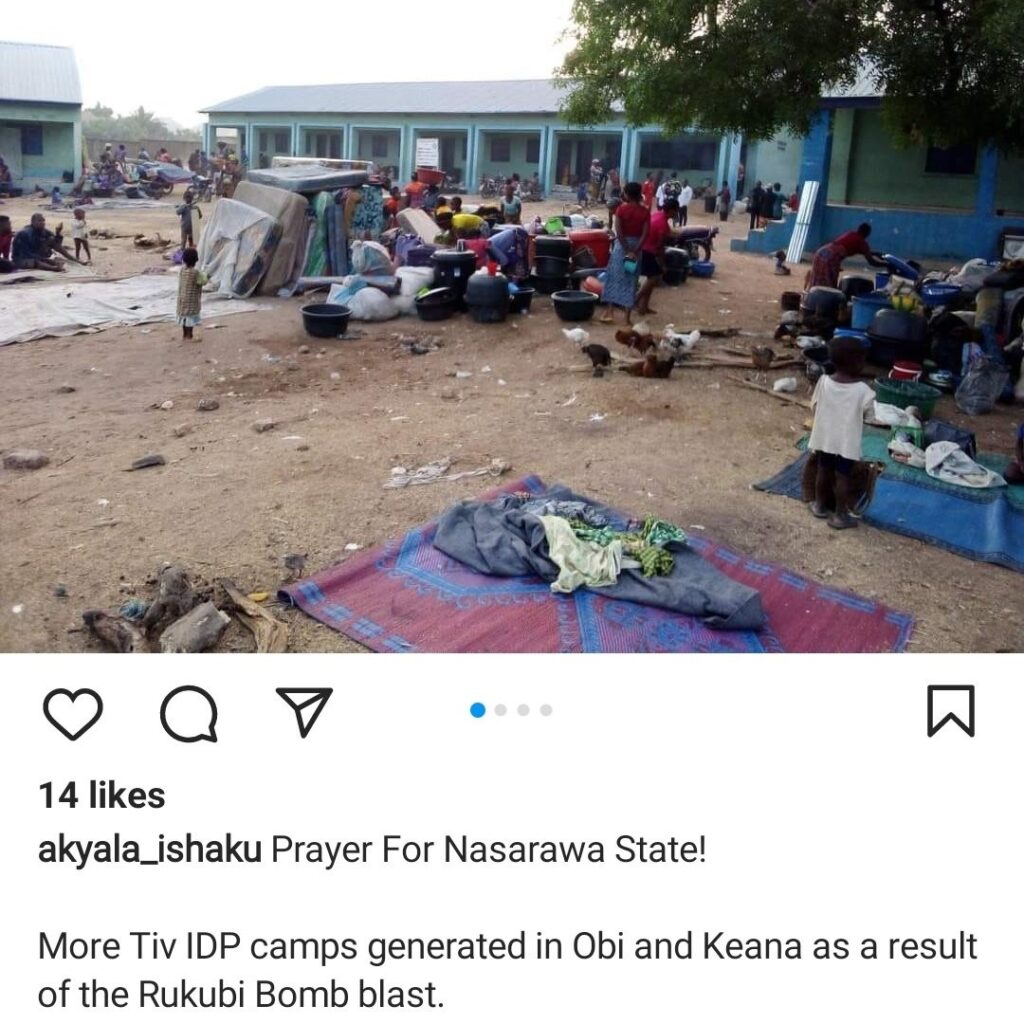
“Thousands of our people have been displaced from across Doma, Keana, and Obi LGAs of the state and armed herders have massacred scores of our people in the previous few days.”


“Chabo village has been devastated to nothing but ashes. As the entire Tiv community in Doma has been forced to flee their homes and numerous others are being slain in isolated communities, a fatal attack was launched on Ajo village in Keana LGA, according to the TIDA President.

The Tiv people of the state were unaware of the recent airstrike that was being used as justification for the widespread killings of the Tiv farmers and destruction of their property, he said, describing the attacks on them as barbaric.


“We request assistance from the federal and state governments, who should provide sufficient security personnel to our communities in the impacted LGAs. All escape routes are still blocked by the herders, who are currently killing our people like animals, according to Ahemba.


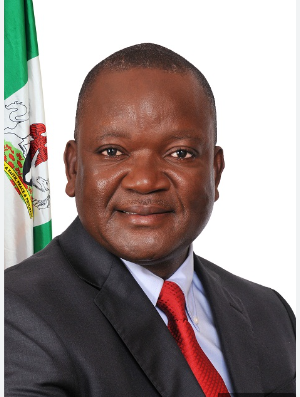
Samuel Ortom, the governor of Benue State, has referred to accusations linking his administration to the deaths caused by an airstrike on a community in Nasarawa State as malicious.

The governor claimed that neither he nor his administration were involved in the terrible event.

He insisted that he did not give anyone the command to commit the deed and that he lacked the authority to direct the air raid operation  which resulted in the killings

The governor said it was sheer mischief for someone to try and tie him into something he had no knowledge of and questioned why he would be associated with the occurrence.

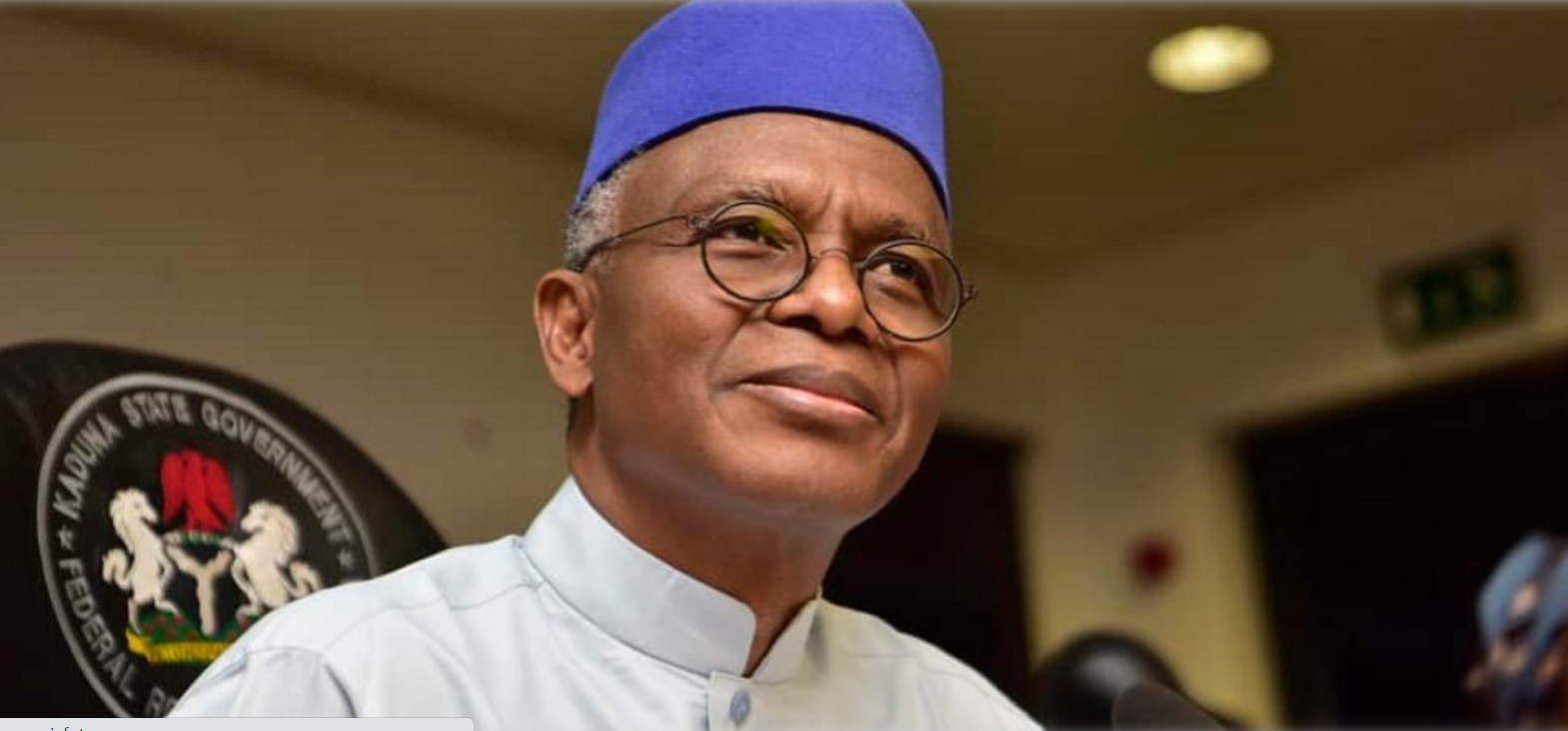
El rufai – Refers to Middle Belt and parts of North as Christian enclaves, says “but how many are they”

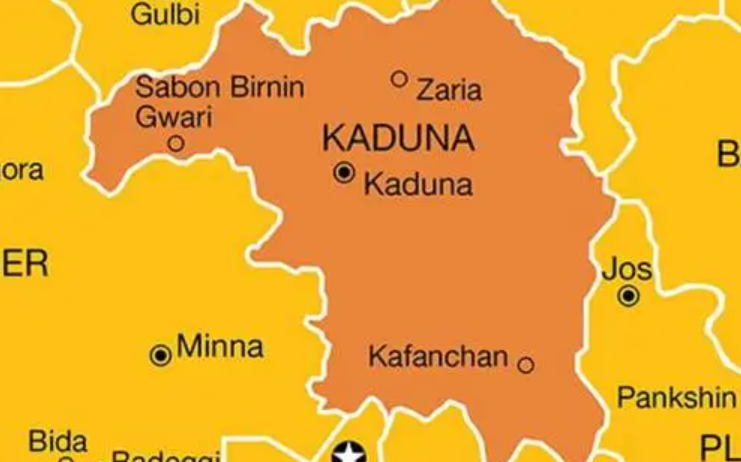
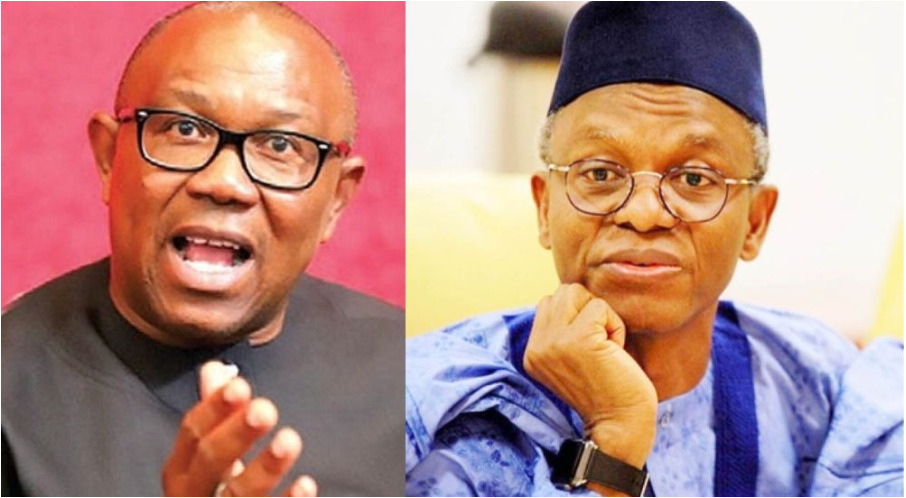
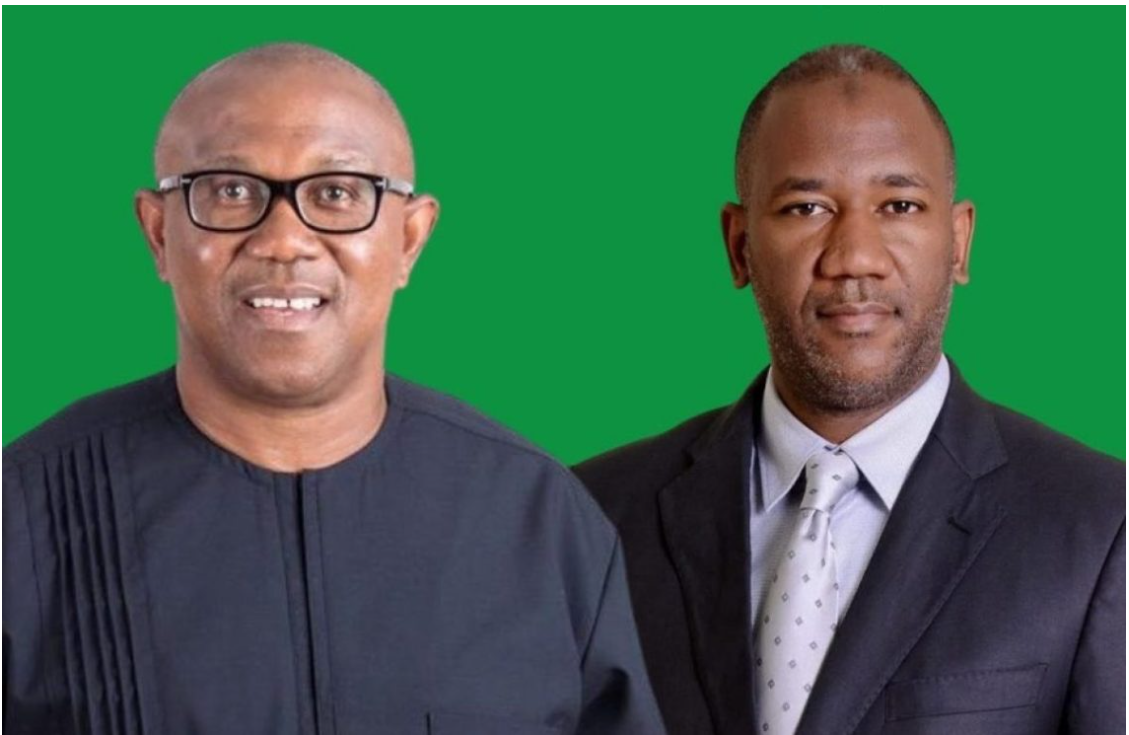
Governor Nasir El Rufai of Kaduna State on Thursday said the Labour Party’s Presidential Candidate, Peter Obi was campaigning in “Christian enclaves in the North but “how many were they” in an interview with TVC News.

The governor had stated that the Presidential candidate of the Labour party would not win the election on 25 February 2023.

“How can Peter Obi win any election? He is polling one per cent in Sokoto, two per cent in Katsina, and five per cent in Kano. That is where the votes are, all states are not equal.

“The fact that Peter Obi is doing 70 per cent in Anambra State does not mean somebody doing 10 per cent in Kano is not better than him. Kano is four million votes, and the number of votes in Anambra is the size of one local government in Kaduna State” the Governor stated.

He predicted that Peter Obi will sweep the South East and would do well in the South-South but where else? And that Peter Obi wasn’t polling well in the South West except for a drop in the ocean in Lagos

He then stated that Peter Obi was polling well in the “Christian enclaves in the North, but how many were they? How many?”

The Kaduna State Governor referred to the Presidential Candidate of the Labour Party, Peter Obi as a Nollywood actor using ethnicity and religious bigotry which will also not make him win the elections since he didn’t have the number of states, and since he (Peter Obi) didn’t have 25 per cent in more than 16 states, he wouldn’t go anywhere.

Nasir El rufai limited the Presidential race between the All Progressives Congress (APC) and the Peoples Democratic Party (PDP) because they had the footprints and the ‘spate’. And that ethnicity and religious bigotry will not take Peter Obi anywhere and “that” this was what the Labour Party campaign was about.”

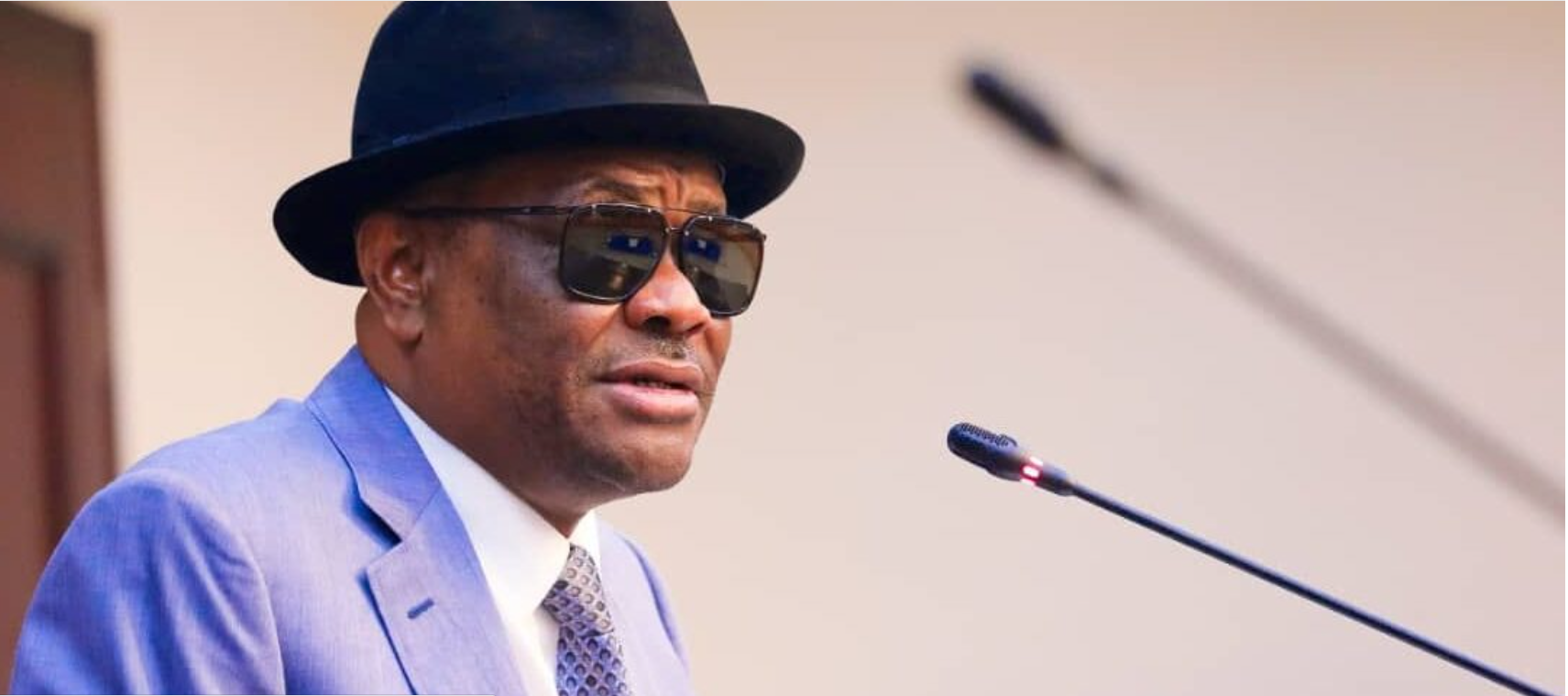
Wike – G5 Governors fighting guerilla warfare

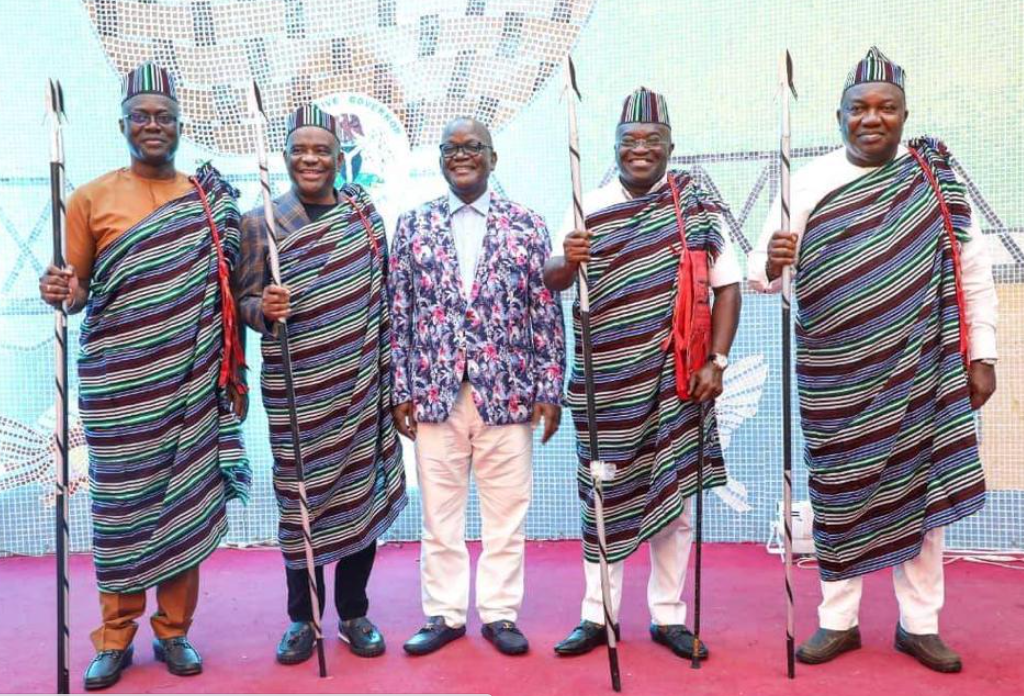
The Governor of Rivers State Nyemson Wike who was in Port Harcourt, Wednesday for Rivers Peoples Democratic Party (PDP) campaign rally for Port Harcourt City Local Government Area has said the G-5 which comprises himself, Seyi Makinde of Oyo State, Samuel Ortom of Benue State, Ifeanyi Ugwuanyi of Enugu State and Okezie Ikpeazu of Abia State were fighting guerilla warfare.

G-5 Governors of the Peoples Democratic Party (PDP)

He also stated regarding the upcoming elections that he had never told “anyone” that he would face the cameras to announce who he would support.

He stated that ” I said I will tell Rivers people the candidate they will support. I did not state the method of telling it. I did not say I will hold live coverage to declare it.

And Rivers people know already. Are you not aware? But you (Rivers people) are aware. Have we not said it? I’ve told people who don’t know. In G-5, we are fighting guerilla warfare. The more you look, the less you see said Wike.

Ortom Responds to Sanusi, urges him to stop meddling in Benue affairs

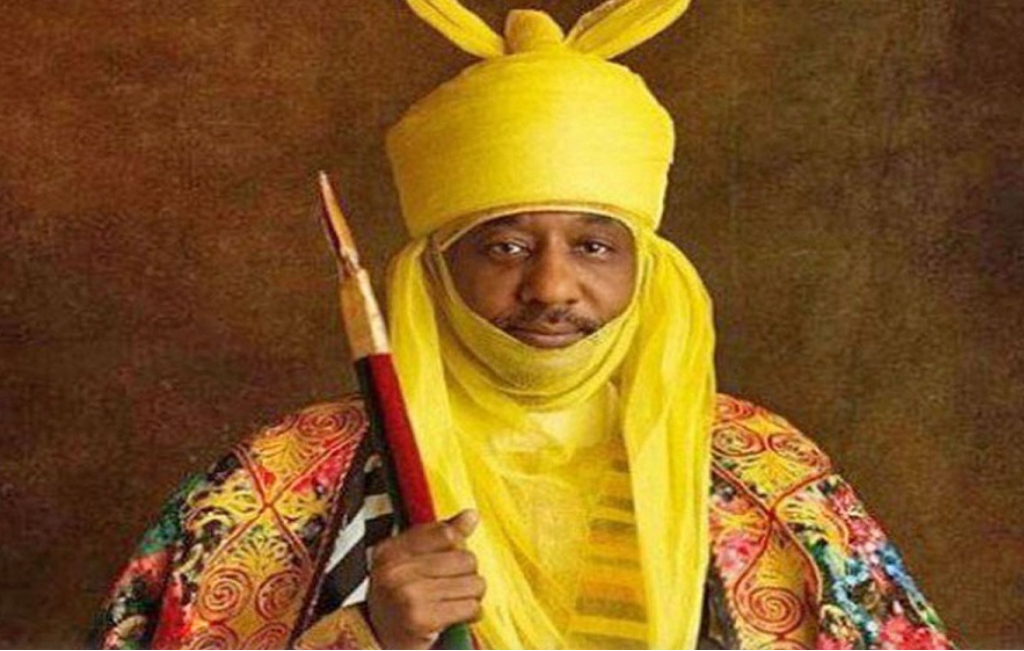
The Benue state Governor has responded to the deposed Emir of Kano, Lamido Sanusi who in a recent video called on Ortom to learn from his fellow governors on how to manage diversity in his state – citing the Governor of Plateau State as his model.


Ortom issued a response through his spokesman, Nathaniel Ikyur in a press statement where he urged Sanusi to restrain himself from meddling in the affairs of Benue State. The Benue Governor also asked the former emir to face the court litigation surrounding his dethronement.


According to the statement, the video was aimed at profiling Governor Ortom before the Fulani race, however, Ortom further stated that he does not intend to join issues with the deposed emir due to the sacredness with which he holds human lives. He maintained that the anti-open grazing law which the deposed emir referenced earlier was validly passed by the Benue State House of Assembly with appropriate penalties for violators.


Ortom also stated that at the appropriate time, he would respond and say his side of the story and expose the evil that had been orchestrated by people perceived to be educated and who are supposed to be good leaders.
He further said he found it strange that Sanusi would advise him to govern Benue like Plateau – when he was “elected by the people of Benue state and not any man in Kano”.


The governor pointed out that the law prohibiting open grazing in Benue did not conflict with the Constitution of the Federal Republic of Nigeria and as such, noone could stop the Benue state government from enforcing the rights and practice of the law.

Kaduna: LP Guber candidate, Asake, Meets Muslim Clerics, assures of fairness

Press Release

Kaduna: LP guber candidate, Asake, Meets Muslim Clerics, assures of fairness

The Labour Party, LP, governorship candidate in Kaduna State, Hon. Jonathan Asake, has assured the Muslim Ummah that his administration would operate on the principles of fairness, equity and justice as enshrined in the 1999 constitution.

Asake gave the assurance at the weekend in Zaria when he and his running mate, Rt. Hon Bashir Aliyu Idris met with Muslim clerics in continuation of their dialogue with stakeholders in the state.

He said as religious leaders who control large followers, majority of whom have been affected by the wrong policies of the APC government, it was imperative to seek their prayers, support and interact on the way forward for the state.

The governorship flag bearer said he will defend the rights of every citizen to exercise their sociocultural and religious freedom at all times, adding that inclusiveness will be his watch word.

A press release made available to journalists in Kaduna on Sunday by James Swam, media aide to the governorship candidate, quoted Asake urging the clerics to deeply reflect on the prevailing economic and security situations of the state and preach the truth so that the electorate would understand what choice to make on March 11.

” I came to unveil myself to you, to seek your prayers and support to succeed in becoming the governor of Kaduna state come March 11 so that together we could secure the state and restore hope to the
people.

” I will be fair and just to all citizens and segments of the state. I will rule by the principles of justice as enshrined in the 1999 constitution as amended. I will defend all and promote all, and each person will exercise their freedom as the constitution permits,” the release quoted the governorship candidate saying.

He lamented that poverty, unemployment, banditry, kidnapping, ethnic and religious conflicts were the result of bad leadership in the state and pledged to reverse the trends within a record time in office.

He said when leaders do not operate on the basis of inclusiveness and empathy the society was bound to experience decline in all ramifications.

Asake told the Islamic clerics that only the Labour Party has the family as its centrepiece as emphasized on its logo showing a father, mother and child. He said as the party of the working class and the downtrodden, the people of the state would not regret voting the Labour Party, LP.

A cleric who spoke, Imam Shugaba Abdulhamid Muhammad, urged the governorship candidate to keep to his promise, adding that it is important “to operate an open door policy” in order to be accessible to the common man.

He lamented a situation where leaders get elected and shut the door behind them, saying “if we see failure in your policy implementation, we shall express displeasure openly”.

James Swam
Media Aide to Jonathan Asake
Labour Party Governorship Candidate
Kaduna State
29/01/2023

Peter Obi visits Southern Borno

Peter Obi paid a visit to Southern Borno as part of his campaign to become Nigeria’s next president making him the first Presidential candidate to visit that part of the Middle Belt.

There was celebration and jubilation as natives from Chibok, Gwoza, Hawul, Askira Uba and the nine local governments welcomed the Presidential candidate.

In his speech, Obi spoke to the people of the region assuring them of solving the Boko Haram conflict and creating a peaceful society where they can engage in agriculture without any cause for fear.

The reactions were positive as the crowd reacted to the speech. The coordinator of the event Isaac Balami who is also the Obi/Datti deputy national campaign manager and senior adviser on presidential campaign matters, funding and grass root mobilization responded by saying that the people of Southern Borno had rejected politics of religion and ethnicity and have embraced competence and capacity.

He also reiterated the love the people of Southern Borno had for Obi and the love Obi had for the people of the region.

Peter Obi kicked off his campaign in the Middle Belt and Northern part of the country and has toured several parts of the Middle Belt as he seeks election on the 25th of February 2023.

The Middle Belt people of Zaar in Southern Bauchi

By Patrick Anum

Recently, we have heard a lot about the killings in Southern Kaduna, but the media has once again seemed to ignore the killings in Southern Bauchi, where armed herdsmen attacks are responsible for scores of deaths every day. Only a few media outlets have been able to report on the atrocities taking place in the area.


The most recent incident that inspired this article occurred on January 22, 2023, at Gambar Sabon Layi in Tafawa Balewa local government of Bauchi State, where Daniel Dabwa was abducted and where four victims were gruesomely murdered.

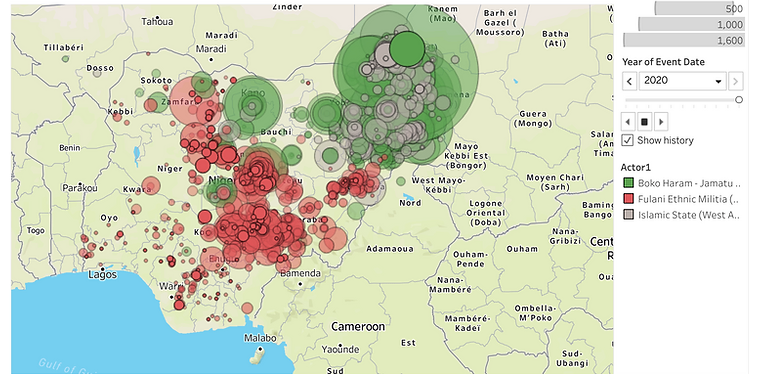
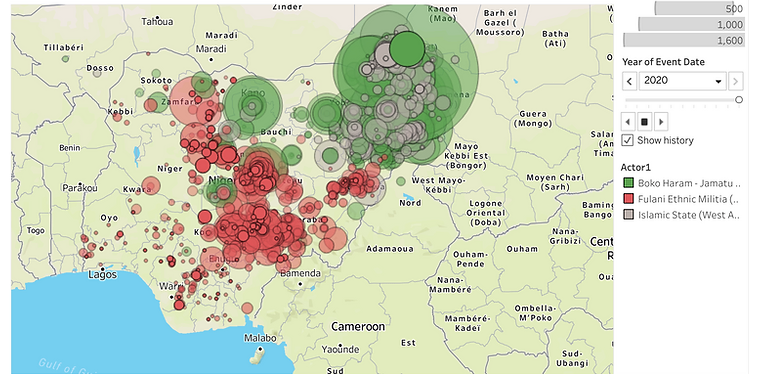
Heatmap of the non state actors and attacks by region (Credit: Genocide Watch)

But to understand the issues in Bauchi, there is a need to take a historic look at Bauchi State as a whole and the issues plaguing the Zaar people, where the former speaker of the House of Representatives, Yakubu Dogara hails from.


Bauchi was founded in 1809 by Mallam Yakubu one of the flag bearers of the Sokoto Jihad and was the first emir of Bauchi. They waged war on the non-Muslim groups in the area as they resisted subjugation.

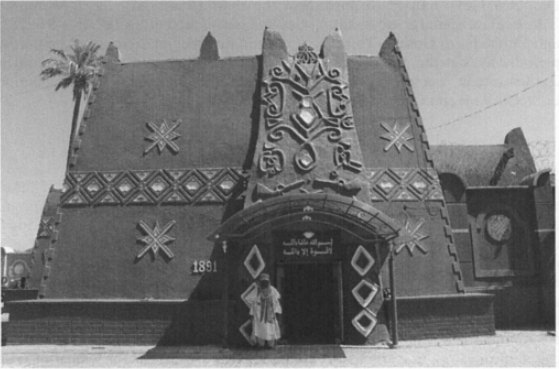
The emir of Bauchi’s palace dated 1891

In recent times, questions of indigeneity have risen as the indigene/settler narrative continues to cause tensions. The Zaar through their historical account settled in the region from before 1345. When the Jihads begun in the 1800’s, they had a peace treaty with Yakubu, the founder of Bauchi however after the passing of Yakubu, the peace treaty was broken by Yakubu’s successors which led to oppression and in some circumstances enslavement of some of the people by the Bauchi emirate. This led to a hostile relationship between the Bauchi emirate and the Zaar people which is still ever present in Zaar consciousness according to Jimam Lar, a scholar and researcher on post-colonial Nigerian history at the University of Jos.

In recent times, in the area known as Southern Bauchi, the Zaar, are the largest Christian group in Bauchi State and their population is concentrated in the Tafawa Balewa, Bogoro and Dass federal constituency.

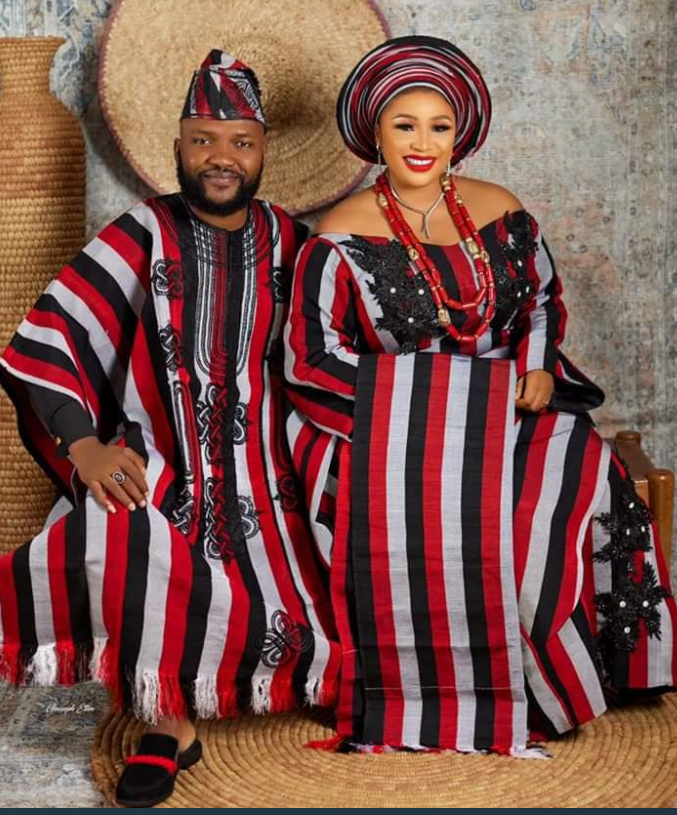
A Zaar couple

The first problem which is very obvious as is the case with other Middle Belt areas is that there has been intent to rename their areas to those of other ethnicities (particularly Fulfude and Hausa names). Tafawa Balewa means “black stone” in Fulfude – with Fulfude being the language of the Fulani ethnic group located in a few states in northern Nigeria.
The Zaar instead call their local government “Puji” instead of Tafawa Balewa which also means black stone but in their language.

We see this trend in other parts of the Middle Belt like Adamawa – where the name of the state was renamed to that of the Fulani jihadist “Modibo Adama” who was responsible for slaughtering the people of Adamawa in large numbers during the Jihad of 1804. And it is unimaginable that in the 21st century, mini colonialism is still ever present where others would try to dominate and rename the lands of others. This is the case of Tafawa Balewa in Bauchi State.

Reasons for the conflict have historic roots with the first being a breach of the peace treaty during the pre colonial period in Bauchi which led to conflict between Yakubus successors in the Bauchi emirate and the Zaar people.

The second arose during the colonial era according to Johannes Harnischfeger – when the British occupied Northern Nigeria and preserved the Islamic structure of the Hausa and Fulani groups in the old Northern region but attached the Non-Muslim groups (in this case the Zaar) to the emirate structure under the Fulani.

Other researchers like Adam Higazi and Jimam Lar have articulated that in recent times, Zaar leaders and organizations like the Sayawa council of elders and traditional rulers accuse the Bauchi state government of discrimination against the people of Southern Bauchi.

The problem persisted all through the colonial era since the Emirs had unlimited powers, as well as the right to distribute land and to collect taxes – this was another cause of conflict between the Zaar and the Emirates

Thirdly, in these emirates, the citizens were subject to Islamic courts despite being heathen/pagan (in the words of the British). This meant that Zaar were discriminated against in the old emirates.


It was so bad that a government commission in 1958 ascertained that Fulani judges dealing with criminal cases only admitted testimonies of male Muslim witnesses and in terms of compensation, christians and traditionalists were given only half or one-fifteenth of the amount that a Muslim could expect (Willink commission report)

By the 1950s, the Zaar had joined the UMBC – United Middle Belt Congress, the party of Northern Nigerian minority groups which had gone into an alliance with Awolowo’s Action Group (AG) and which was built on the quest to liberate ethnic minorities from the Emirate system – a move that the Hausa leaders point to as a cause for the Zaar’s recalcitrance.

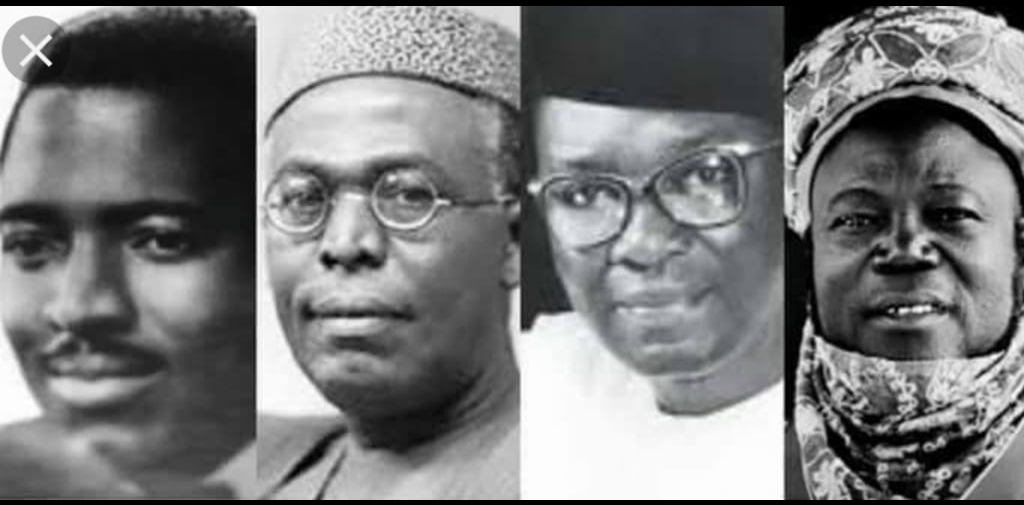
A photo of Joseph Tarka, Obafemi Awolowo, Nnamdi Azikiwe and Ahmadu Bello in the first Republic.

The Zaar have largely remained more culturally and politically oriented towards the Non-Muslim groups of Plateau and Southern Kaduna than towards the Bauchi Emirate. Due to this reason among others, they have therefore advocated for the creation of a lowland state which will encompass Southern Bauchi and Plateau States.


On the issue relating to disturbances plaquing the area, Southern Bauchi has witnessed violence at different times in Nigeria’s history.

Violence occurred in 1959, 1977, 1991, 1995, 2001 and 2011. The first case of conflict happened in 1959 which was low in scale but since the creation of Bauchi State in 1976 by the late General Murtala Mohammed, the conflicts quickly escalated and issues as to indigeneity arose.

Since then, the Zaar accuse the Bauchi state government of stripping social amenities away from their areas during interviews with members of the community. To emphasize this point, we were able to confirm that Tafawa Balewa was stripped of its status as a local government headquarters where it was relocated to Bula, the main centre of the Hausa – Muslim district.
The police divisional headquarters was also relocated to Bununu as unjustifiable reasons were given for this move.


In sum, the Tafawa Balewa conflict is defined by two key factors – the historic evolution of the relationship between the Zaar and the Bauchi emirate, a relationship they believe has made them second-class citizens on their land – and secondly, issues over indigeneity and the founding of Tafawa Balewa.

In the wake of the riots in 1991, the Babalakin commission of inquiry was set up by the then Military administration to look into the conflict. It made recommendations of which some have still not yet been implemented in totality. The first being the creation of a chiefdom for the Zaar people of Tafawa Balewa and secondly, the prosecution of the perpetrators of the violence during that period.

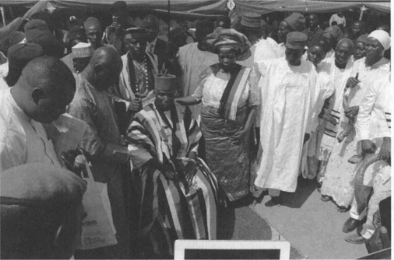
Zaar cultural festival, Tafawa Balewa where the Gung Zaar (paramount Chief was installed) but without being gazetted and without agreement from the Bauchi emirate (2nd November 2013).

Since 1991, there have been 10 governments in Bauchi and all, up to date have not implemented the recommendations of the commission of inquiry holistically. This has led a lot of analysts to see credence in what some of the Zaar people have said regarding the Bauchi State Government.

The former Governor Isa Yuguda created a Chiefdom but put its headquarters at Zwall and not Tafawa Balewa which was rejected by the Zaar people as not having complied with the recommendation of the various commissions of inquiry.

Of recent, the present Governor of Bauchi State, Bala Mohammed made the news for setting up a committee to look into the issue yet, like all governments before him, those words have been all smoke without fire.

The Zaar people in 2023 are still seeking the Chiefdom of their people and this issue is not unique to this area of the Middle Belt. We see the issue of chiefdoms as an important weapon that has been used to subjugate the Middle belt people by continuing age-long colonial policies where diverse groups instead of being granted their chiefdoms are being attached to emirates and even if they are being granted, are granted in part – and in areas away from where there are huge settlers which means that those settlers in the future could lay claim to these lands.

Another example is in Nasarawa where many groups such as the Tiv who have a whooping 11 wards have been deprived the right to have their traditional structures or chiefdoms. What this means is that they have to be under emirate rule in the state despite being largely traditionalists and christian.

We can also witness this unfolding in Southern Kaduna (the region of former Southern Zaria and not the Southern Kaduna senatorial district) where the current governor of Kaduna State has watered down most of the traditional institutions of other ethnicities whilst reinforcing his – or in specific instances where he has sent people from his ethnicity to be district heads to people of different ethnicities. As such, there must be a conscious effort to reject these attempts to deny or infiltrate the traditional structures of the Middle Belt people.

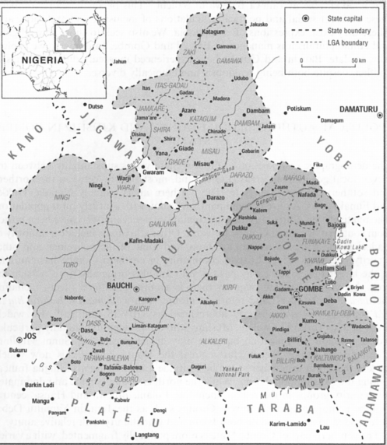
Bauchi State and environs

In conclusion, the most recurring theme in Nigerian political discourse is identity, ethnicity, traditional structures and land ownership. It is strange that settlers choose to have these debates with indigene Middle Belt groups when the 1958 Willink commission report showed the areas consisting of the different ethnic nationalities in present day Nigeria with little to no disagreement at that time. Infact, the then Northern regional government agreed with those mappings.

In the coming years, Nigeria will have to answer the indigene/settler question and the issue of minority rights as a whole. As for colonial documents and the intent behind migration during the colonial period, the British have clearly stated their reasons for importing groups into the geographical spaces of others. They site administrative expediency as the major reason.


The truth is that even the colonialists had a clear policy regarding the indigene/settler question and this could be used as a starting point when proffering solutions to these issues going forward.

As for the Zaar people in Southern Bauchi, the short-term solution should be the implementation of all commissions of inquiry reports holistically, a referendum regarding which State the Zaar people should belong to and the adoption of the said referendum.


From a regional perspective, a progressive step would be to adopt the Willink commission report regarding the creation of a Middle Belt region and the granting of autonomy to each ethnic nationality in the region.

2023: Why We Adopted Peter Obi-Middle Belt Forum

The National President of the Middle Belt Forum (MBF), Dr Bitrus Pogu, has given reasons the group is supporting the presidential candidate of the Labour Party (LP).

In an interview with VINCENT KALU, the MBF leader noted that the historical monolithic North no longer exists.

Continue Reading…

So far, are you impressed with the way the campaigns are going?

Campaigns should be based on issues, but you see violence happening in some places, which shouldn’t be. Instead of addressing issues, you can see that the presidential candidates are attacking one another; so it is not how mature campaigns should be, and we are hoping it will get better.

Are you not worried about the violence?

Everyone should be worried. We saw how the People’s Democratic Party (PDP) candidate, Alhaji Atiku Abubakar campaign trail was attacked in Maiduguri. It’s unfortunate that such a thing could ever happen. If the trend continues, we may not have a smooth election, which may spell doom for our democracy, and I wouldn’t want that to happen. We pray that all parties that are involved in such things should call their members to order so that we have a rancour-free issue based campaigns that will give Nigerians the choice to elect who they feel will deliver for them good governance, having elected him in 2023.

The presidential candidates signed a peace pact to maintain peace, but in some states, the governors are not allowing the opposition parties to use their facilities and so on. What is your take on this?

It is an unfortunate development. It just means that we are gradually becoming a lawless society, if we are not one already. My prayer is that those involved in such acts should become more civil in their behaviour so that we have development in our political process.

MBF and some southern groups have adopted Peter Obi as their presidential candidate. What informed that decision?

Equity, fairness and justice: it is just those three words. Every Nigerian knows that the six political zones deserve equal treatment. The South East deserves fairness, justice. Similarly, we have had presidents from North West and South West and continue to interchange since 1999. Now, after eight years of President Buhari, it should justly go to the south, and, in the south, the South West has had former President Olusegun Obasanjo for eight years, and now Prof Yemi Osinbajo as the vice president for eight years in 2023. The South-South has had former President Goodluck Jonathan for nearly six years as president, while the South East has not produced any. So, for justice, equity and fairness, it is only proper for it to go to the South East, and, with consultation with South East leaders, Peter Obi emerged as the preferred candidate, and, therefore, he left the People’s Democratic Party (PDP) and went to another platform. We are supporting him based on equity fairness and justice. That is the criterion.

Does equity, fairness and justice override competence in this instance?

Peter Obi was selected based on competence. In every geo-political zone, there are so many competent people, and among the lot of competent people who are in consideration from the South East, he stood out as the one we feel that, at this point in time, can help us in bringing the new Nigeria we are all aspiring to have. Competence, youthfulness, being energetic and not sickly, he has them all. He is the type of president that Nigeria needs now that can do the job without fainting, without going to the hospital every time, and he has the brains; he is an entrepreneur, a good trader and a good manager we believe can manage the affairs of this country, and he has a track record, which cannot be faulted. So what other competence do you want?

Some would argue that the North East has also not produced the presidency since 1999

The movement we have had since 1999 was between the north and the south. The North East could not capture the president after Obasanjo, it went to the North West, with the late Umaru Yar’Adua, and then it went to Jonathan of South-South, and it went back to the north, and as the North East didn’t grab it, was it the fault of the South that the North West grabbed it? Would you consider Buhari to only be North West, because, maternally, he is North East and paternally, North West? You can only blame the people in the north for not micro zoning it to the North East. Now, since it is going to the south after a northern president, if fairness is being applied appropriately, and our partners in the South said , ‘yes’, for fairness, equity, justice, it should go to the South East. It is nobody’s fault, let the people of the north now decide why when it came back to the North, it wasn’t given to the North East.

When do we put a halt to ethnicity, religion as considerations to winning elections?

It was when Nigeria became a nation, but, today we have nation states, and not a nation. We have tribal nations; we don’t have a nationhood created out of the Nigerian space with geographical states, which we accept as our country. We still have these forces pulling everybody, and before we could get there, we have to be able to address issues of tribal cleavages, religious cleavages. For example, when we were maturing and there was tranquillity in the land, a South West candidate, the late M. K. O. Abiola, chose Alhaji Kingibe as his running mate, no Christian even from the North raised an eyebrow to question the Muslim-Muslim ticket, but, today, we have a different situation. Boko Haram, they say they are Islamic group fighting; whether true or false, it is up to them to decide. We have ISWAP, an Islamic group fighting to carry out a jihad, which nobody understands. Then we have herdsmen militia, all having Islamic roots, and the Christians from the North, particularly the Middle Belt are threatened. So, that issue of same faith ticket cannot be tenable now, because even in this government, we have seen a lot of nepotism; people from the same religion, the same part of the country have been planted in strategic positions as if the others are not part of the country. From this, we have not developed into a nation; we are still states of nation within the space called Nigeria. By the time we are able to be a nation where Nigeria comes before religion, where Nigeria comes before tribe, and then we can do away with these things. In fact, when you talk to somebody at that time they will tell you, forget about this primordial sentiment, but, today, the realities are staring us in the face, and we have to face it squarely.

In the past, Chief Awolowo and Dr Azikiwe picked South-Eastern and Northern Christians as running mates, and no one raised any issues. When did it become an issue?

It was when religion and ethnicity started to stare us in the face. We didn’t have any Boko Haram before killing people for no reason; we didn’t have ISWAP before killing people for no reason; we didn’t have Fulani herdsmen militia before, but now, we have them, and everybody is complaining. Even in the North, people are complaining that nepotism has carried the day instead of inclusiveness and consideration for our diversity. These issues started to stare everybody in the face. You look, somebody is being killed by somebody who ‘pretends’ to be fighting a religious battle. Why should I support a system where both of them belong to the same religion, because I felt threatened that way, and that was why some APC leaders came out clearly to say, ‘We are APC, we believe in this political party, but we cannot accept Muslim-Muslim ticket’. It is because these things are realities today; it is happening because of what is going on today. In the past, when such things didn’t exist, nobody cared; nobody mentioned anything about it.

When Abiola and Kingibe ran together, nobody even asked why a Muslim from the South West picked a Muslim form the North East. It is the reality of today that informs the behaviour of today. So let’s address these things and let us not pretend and say they don’t exist. They do exist. The ordinary Christian from the North feels threatened by these attackers; in fact, the entire nation is threatened, and the Christians from the North are saying no to a Muslim candidate. The Muslim deputy is even coming from the Boko Haram enclave, so why should we support them? These are problems that are there because of the reality of today, and this reality has to be addressed so that we can move forward towards constituting a true nationhood in our conducts and in everything that we do. An American says, he is an American, and not a Christian American or a Muslim American; and a Nigerian is supposed to say he is a Nigerian and not a Muslim or a Christian from Nigeria. We have to address these things and then get out of the mess we are in.

One had expected that the Middle Belt Forum from the North would go for a candidate from the North, in the spirit of the monolithic North.

There is nothing called monolithic North. During Obasanjo’s period when some Middle Belters were appointed ministers and were given some key ministries, our brothers from the far north started saying that those appointees were not northerners. What defines a northerner? The Middle Belt struggle has been one of the oldest socio-cultural groups that existed. The struggle then was for a bit of the cake so that the bigger Northern Region would not forget the nationalities that were found in the southern north, and that led to what we have today. In the beginning, the powers that be in the North tried to carry these people along, but divisions started, and people started to say, ‘You are not true northerners’. So, who is the true northerner? So, they began to see themselves as a separate entity —the Non-Hausa Fulani and the Non-Kanuri minorities who were neither under the caliphate nor under the sultanate of Borno. When the British came, and these groups were coming together more strongly, and now they can say, ‘We have our identity’, the British kept us together for their administrative convenience and through the Indirect Rule that we have been subjugated to suppression and oppression, and it continued even after independence, and that is why the struggle continues. That monolithic North doesn’t exist today. Even the Hausa people, most of them are crying out to say that the Fulani came and deceived their forefathers, why actually they were fighting a political battle, took over our rulership.

Even some of their leaders, who were Muslims, were killed on Eid day, and their authorities taken over by the Fulani. They were Muslims before the Fulani jihad came. So, the Hausa are starting to probe into that historical episode to say, ‘These people are usurpers, and so we cannot accept it anymore.’ So, the cleavages are coming, you cannot hide history, because it will expose the truth, which people are hiding. Some of our leaders tried to stop the teaching of history. History is very important. Without history, I cannot tell my Kanuri brother that, before the colonial masters went to meet their leaders in Mongonu, they came to Chibok in 1902, and so we were also negotiated or forced into the protectorate just as you were. History tells me that my people were independent before we were all brought together. The monolithic North is now into cleavage, because history has exposed things that were hidden which are now in the open. But for Middle Belt, our struggle has been for a very long time, and we are only trying to ensure that our people are properly placed where they are supposed to be, and not to continue to play second fiddle to anybody; we are not second class citizens in our own country. By the time everybody has the right to be a Nigerian, just as everyone has just one vote, then Nigeria will be very good for everybody.

OBIDATTI SUPPORTERS IN NORWAY SPONSORED 5,000 POSTERS TO THE GRASSROOT IN KADUNA STATE

n their quest for better Nigeria, The Obidatti Supporters in Norway sponsored the production of 5,000 posters to the grassroots in Kaduna State.

After realizing the poor publicity of Peter Obi at the grassroots level, the decided to support the Obidient Movement with some campaign  materials which is expected to be be distributed down to the grassroots through the Peter Obi Grassroot Alliance, a group work assiduously by taking the Peter Obi message down to the grassroots.

The Coordinator of the group, Samuel Stephen expressed his profound appreciation to the Obidatti Supporters Norway group stating that the campaign materials will go a long way in advancing the Peter Obi campaign. The materials are expected to cover 12 LGAs and over 130 wards across the state.

Wike Criticizes Akitu for Being Silent on Buharis Lopsided  Appointments

Atiku on Wednesday said his government would be run on national unity if elected as president in the 2023 general elections.

He had promised to unify Nigeria by ensuring equity and fairness as well as reflect the federal character system in appointments to government offices.

But Wike described Atiku’s comment as insincere and maintained that Nigerians could not be fooled again.

He said, “Some people now are criticising Buhari’s appointments. Why did they not challenge Buhari since? Election has come. Who is fooling who? All these past seven years, you have not challenged Buhari but election has come. Nobody can fool anybody,” the Rivers governor stated.

Wike, therefore, advised Atiku to start his government of national unity within the PDP by ensuring that Iyorchia Ayu step down as PDP national chairman.

“Some people said they will form a government of national unity. It is not to talk but start now to implement it. If you cannot implement the small one, is it the big one (you will implement?)

“I pity poor Nigerians. When I heard people go to townhall meetings and said all kinds of things: they said they will implement restructuring, they will make sure that every zone will have a member in the security council, that it is not good for one zone to produce all the security chiefs but it is good for one zone to occupy all party positions. You see how Nigerians are,” the governor stated.